

Space is getting busy, but this platform has dozens of tools in the toolkit.
The European Space Agency’s RAVEN (Rendezvous And proximity Vehicle for ENabling multi-mission) project focuses on developing a multi-mission platform for in-space transportation through a series of demonstrator missions. The platform will ultimately be completed for in-orbit servicing. The first of these, a demonstrator for orbit transfers, satellite approach, and controlled deorbit manoeuvres, is now underway following the contract signing between ESA and a Polish consortium led by PIAP Space.
The demonstration will also support future applications such as reconnaissance of target satellites for security purposes, reinforcing Poland’s role in the European multi-mission spacecraft technology landscape and to enhancing the security and autonomy of both national and European space assets.
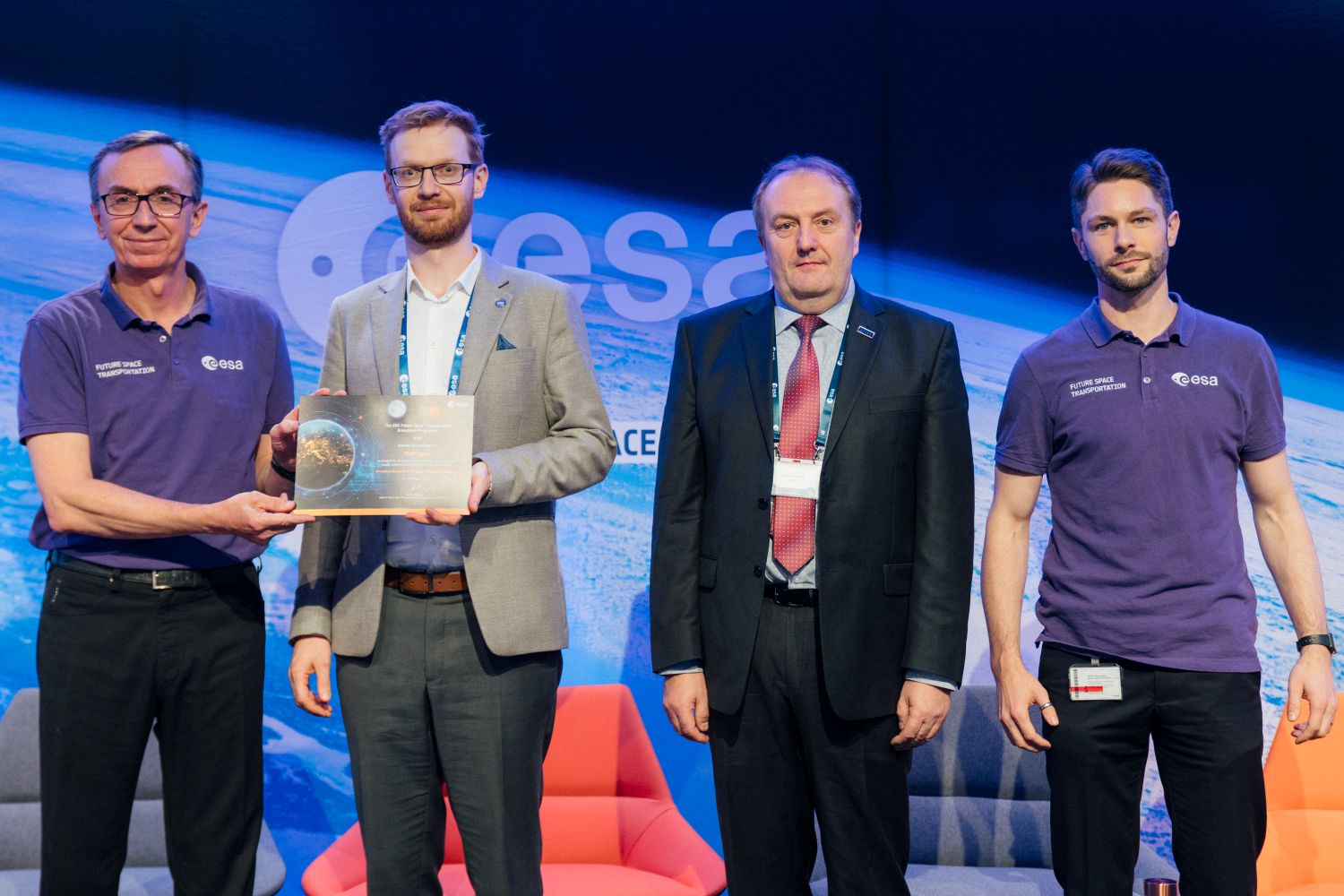
PIAP Space receives an award for RAVEN at the FLPP Autumn Session 2025
First proposed by the Polish Space Agency (POLSA) and driven forward by ESA’s programme for future space transportation, FLPP, RAVEN combines national initiative with European coordination to explore modular, reusable spacecraft handling multiple operational tasks in orbit.
“The Raven programme and the contract with ESA demonstrate that Polish and regional companies are capable of delivering cutting-edge technologies in the field of ISTV spacecraft,” said Paweł Paśko, Technical Lead and Manager of the RAVEN programme.
“Our long-term ambition is to combine ISTV technology with our orbital robotics solutions in subsequent demonstration missions and deliver turnkey solutions for defence, institutional, and commercial customers.”
The final system is expected to be a fleet of compatible components that can be configured as needed – a flexible building-block approach.
RAVEN will demonstrate a range of essential in-space functions, from orbital transfers and refilling to cargo delivery and potential exploration beyond Earth orbit.
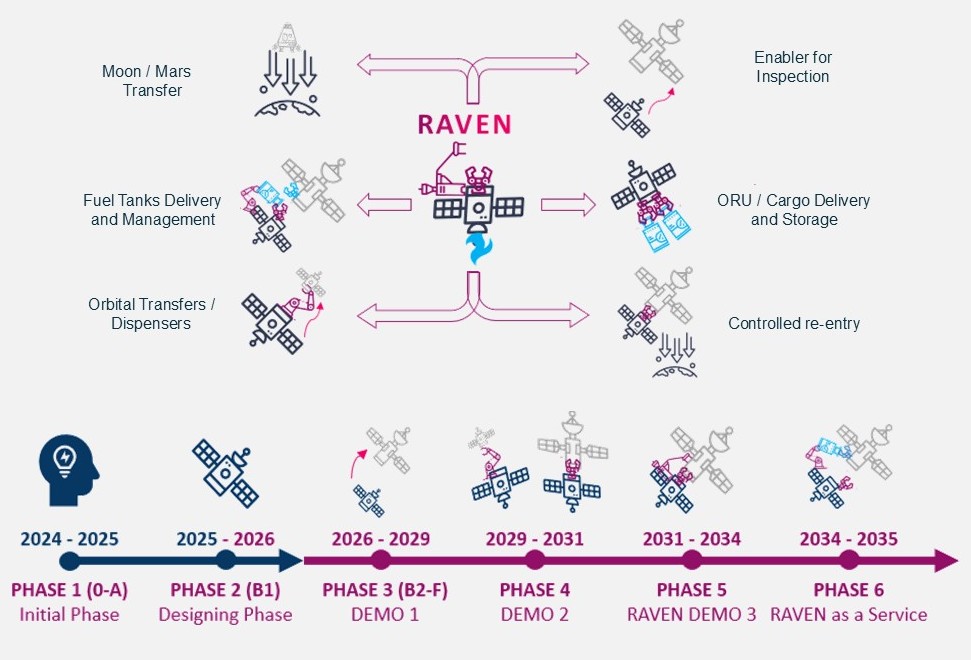
RAVEN project timeline
It will build on the interfaces defined within the In-Space Proof-of-Concepts (InSPoC) demonstrations, applying them in practice to prove how coordinated European technologies can work together in orbit. It will also serve as the first test platform for InSPoC-3 for on-board and shared intelligence.
“The RAVEN programme is a catalyst for space actors in Poland,” said Valère Girardin, Programme Manager for RAVEN in FLPP. RAVEN shows how FLPP successfully coordinates capabilities, uniting companies that until recently worked separately across different areas of space technology.
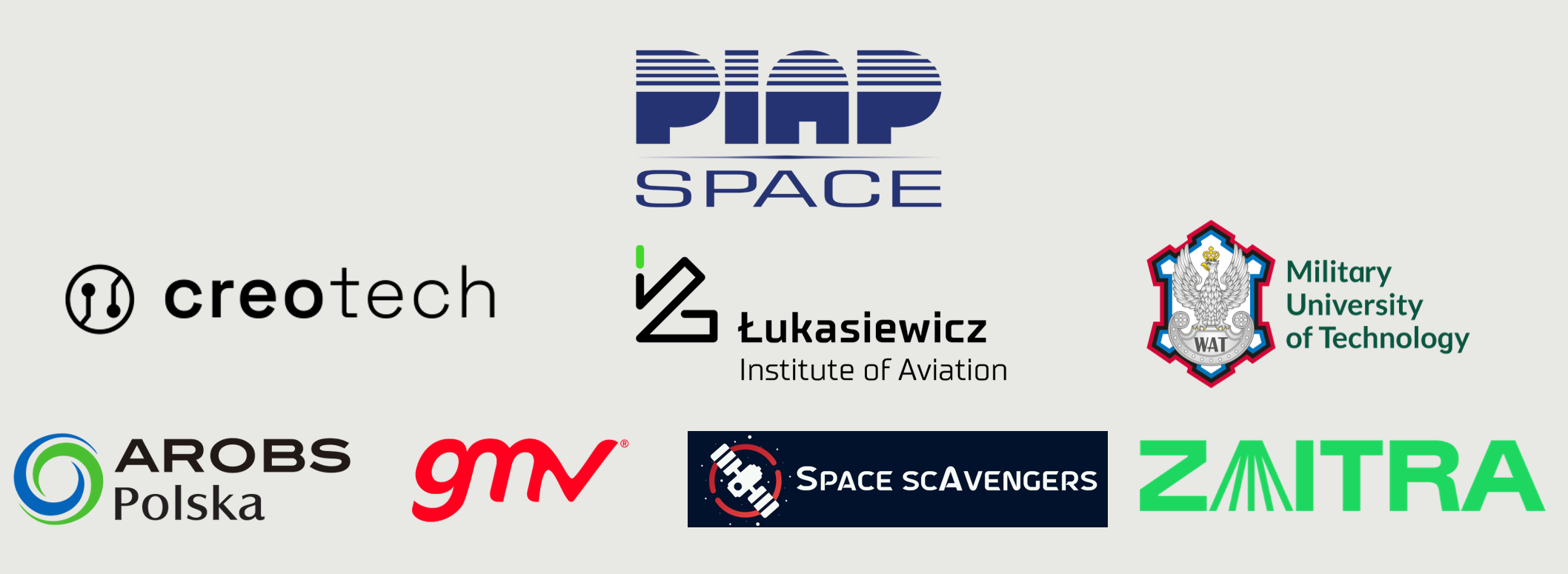
RAVEN consortium, led by PIAP Space
This is the strength of FLPP’s cooperative development model: by merging expertise across national agencies and companies, FLPP ensures that innovation and industrial know-how continue to expand within and across Member States.
“FLPP is a very reliable and helpful programme for us,” mentioned Zygmunt Anioł, Director of the Space Safety Department at POLSA, when discussing the collaboration with ESA. “It’s in line with our priorities, making it easy to adopt.”
The consortium recently completed the initial feasibility phase, validating the concept and confirming its technical feasibility. Their achievement was awarded during the FLPP Autumn Session in Paris last week, where ESA formally announced the contract signing for RAVEN’s first demonstration mission and highlighted Poland’s growing contribution to Europe’s in-space transportation capabilities.
Behind the technology lies a carefully planned, decade-long roadmap. Following the current design phase, RAVEN will progress through a sequence of demonstrations, before evolving into RAVEN as a service by the mid-2030s. Each step will refine both technology and operational models, culminating in applications such as cargo delivery, refilling, and controlled disposal.
“With Raven, we are in a ‘learning by doing’ mindset, with simple developments over a series of demonstrators, rather than building a complex vehicle from the start,” said Valère Girardin. “Our ‘test fast, learn fast’ approach enables the mission ambition to increase gradually with vehicle complexity from one demonstrator to the next.”
Each demonstration mission within RAVEN is designed to deliver results with clear commercial relevance, ensuring that every phase produces a marketable outcome while advancing Europe’s overall capability in in-space logistics.
RAVEN joins all the puzzle pieces: national effort connects to European purpose; engineering discipline joins with market awareness. Through this programme, ESA and Poland are building the mechanisms of movement that will make Europe’s presence in orbit more flexible, sustainable, and resilient.
Discover more about RAVEN