

Last week in Paris at Salon de l’Aveyron, the European Space Agency’s programme for future space transportation, FLPP, united the European space industry once again with its Autumn Session, reflecting a programme that is a key strategic enabler of space transportation technology development. The space transportation community spoke with clarity and conviction – FLPP is where the future of European space capabilities is being built today.
With more than 220 participants on site and many more following online, the pride and confidence in the programme’s progress were unmistakable. Returning players greeted each other enthusiastically and newcomers were welcomed with open arms. Each iteration of the twice-yearly session grows in size and scope, reflecting how firmly FLPP has become established as a strategic enabler of Europe’s space transportation capabilities.


Conversations about engines, demonstrators, and in-space operations reflected the growing maturity of the approach: technically disciplined, commercially motivated, and coordinated across borders and sectors. Panellists from start-ups, large system integrators, national and European agencies, and Member State delegations described how ESA provides the structure that makes such collaboration possible -through demonstrators, minimum viable products (MVPs), and a rapid development model that manages risk while maintaining progress.
Request the event replay
ESA’s Director of Space Transportation, Toni Tolker-Nielsen, and Jérôme Breteau, Head of Future Space Transportation, opened the event by reinforcing FLPP’s strength in connecting Europe’s industrial capability, national ambitions, and ESA’s long-term strategy. FLPP ensures new technologies mature in step with market needs and future missions.
“We are putting Europe in the driving seat,” Breteau said, setting the tone for a day shaped by confidence in Europe’s collective direction.
For industry, this has created space to think bigger. “ESA gave us the freedom to explore, innovate, and contribute our own ideas,” said one participant. Christian Bauer of DeltaOrbit added that FLPP “gave the team confidence that we can do this – and that we’re on the right track.”
That sense of confidence in ESA’s direction rang through the day. As a strategic enabling programme, it has become a mirror in which European companies see themselves reflected in the future they are helping to build.
For the first time in these sessions, a panel focused on dual-use and defence applications of space technology, and how the technologies developed under the programme will be crucial to safeguarding Europe’s future. Industry speakers and a representative from the Polish Space Agency reinforced how autonomy, mobility, and resilience are essential for both civil and defence applications, and that collaboration through ESA helps Europe prepare for both.
That future was visible in the results. Two new projects in in-space transportation were recognised for their achievements. The Exploration Company signed a contract to advance InSPoC-1 into its consolidation phase for in-space docking technologies. PIAP Space signed a contract for the first demonstration mission under the RAVEN programme, which will test in-orbit transfer, approach, and controlled de-orbit manoeuvres.

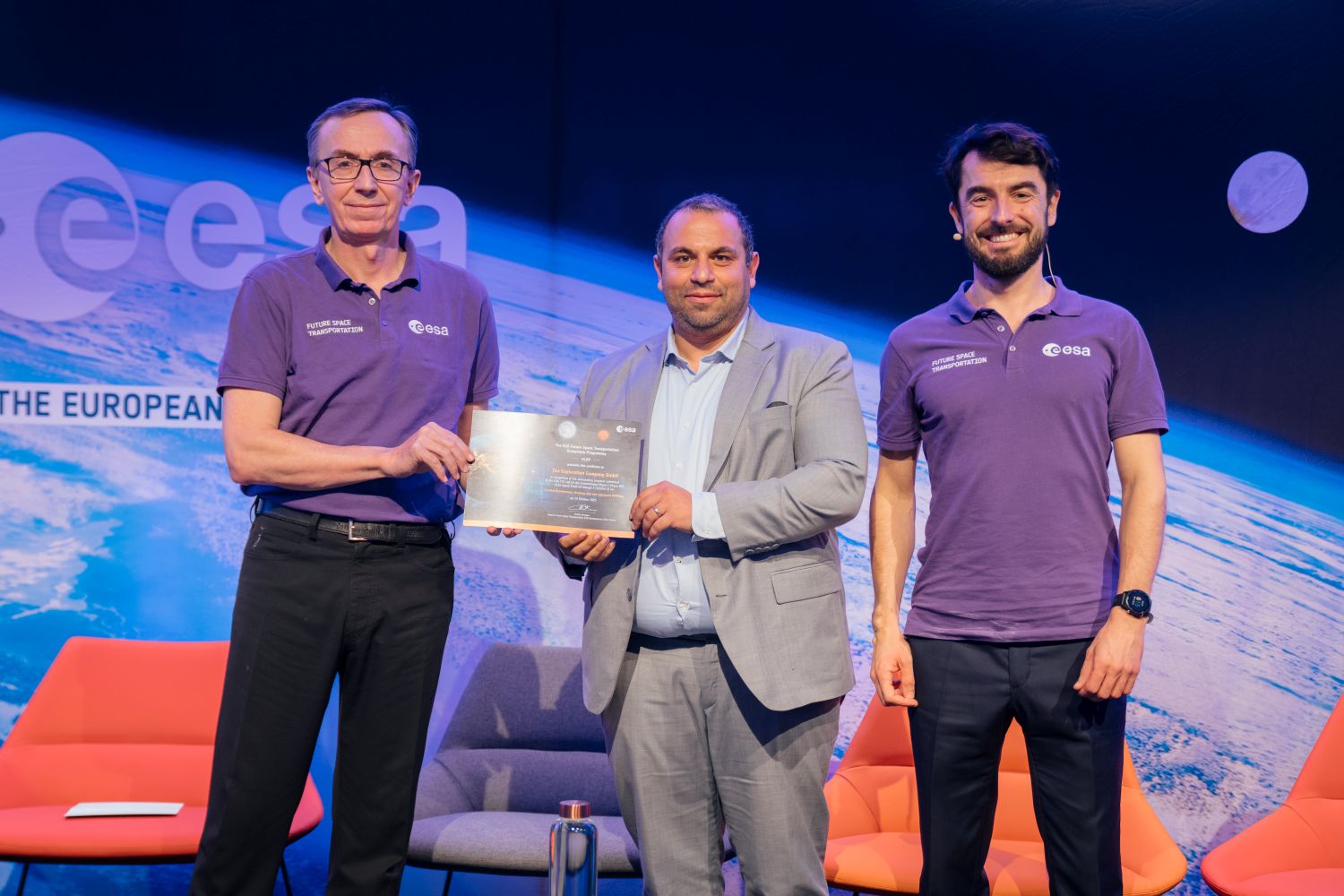
These advancements highlight how FLPP continues to strengthen Europe’s capabilities across every phase of the journey – from access to orbit to in-space logistics and return. Each milestone is part of a broader design: an interconnected ecosystem of technologies and actors ready for operational use.
That future is also not far off – FLPP’s model of incrementally demonstrating Minimum Viable Products, or MVPs, ensures marketable products quickly. Instead of spending years developing an expensive spacecraft, this incremental approach is key to ensuring marketable outcomes while advancing Europe’s overall capabilities in space technology.
Member State representatives echoed that trust. Delegates described FLPP as reliable, responsive, and closely aligned with their priorities. One noted how “whenever we had problems, it was easy to solve and overcome them,” while another said the programme “helped us gain time” and opened opportunities for national industry, including in defence markets. Their remarks reflected a shared view: ESA delivers because it works collaboratively, supports national industries, and keeps Europe moving as one.
Throughout the day, cooperation remained the steady theme – across borders, systems, and disciplines. Breteau reminded participants that “it’s important that the this endeavour goes on,” in a call for continuity. The community now gathered sees itself as part of a longer arc, where Europe’s capabilities are not only advancing but converging.
As the Ministerial Council approaches, the message is unmistakable. FLPP is not a programme on the rise; it is the foundation of Europe’s future in space transportation – a place where technical achievement, commercial logic, and strategic coordination already meet. The future is being built here, and it is already taking shape.