

Revolv Space is a start-up currently incubated at ESA BIC Noordwijk and working towards the goal of maximising mission return for small satellite constellations. The aerospace engineers who founded Revolv have developed an autonomous and fail-safe solar array drive assembly to enable truly continuous payload operations for small satellite missions.
Revolv was founded in 2021 by four aerospace engineering students from TU Delft. After spending a few months experimenting with the technology and validating Revolv’s value proposition with prospective customers, the founding team raised funds to be able to turn full time, hire three more engineers to complete the technical team, and raise the TRL of the technology from 4 to 7. Revolv’s international team now counts 8 people and operates out of ESA BIC Noordwijk, where the start-up is currently incubated, with offices in Torino (Italy) as well.

Figure 1: a delegation of the Revolv Space team presenting at the Plug&Play Tech Center summit in Milano, Italy, on 14 June 2023.
The mission of Revolv is to enable continuous operations of small satellite missions by designing, developing, and testing cost-effective and reliable components that can be produced at scale. Small satellites, like CubeSats and microsatellites, have facilitated the access to space and enabled new commercial opportunities for space companies, thanks to the trends of miniaturisation and decreasing launch costs. In addition, emerging technologies such as on-board AI, intersatellite links, and electric propulsion systems, are revolutionising the capabilities of small satellites. However, in order to fully monetise space assets of satellite operators, the architectures of small satellite buses need to be reinvented, starting from the power system. The power budget is the top limiting factor to the payload duty cycle (i.e., the fraction of time during which the payload is capable of collecting valuable data or providing the service it was designed for).
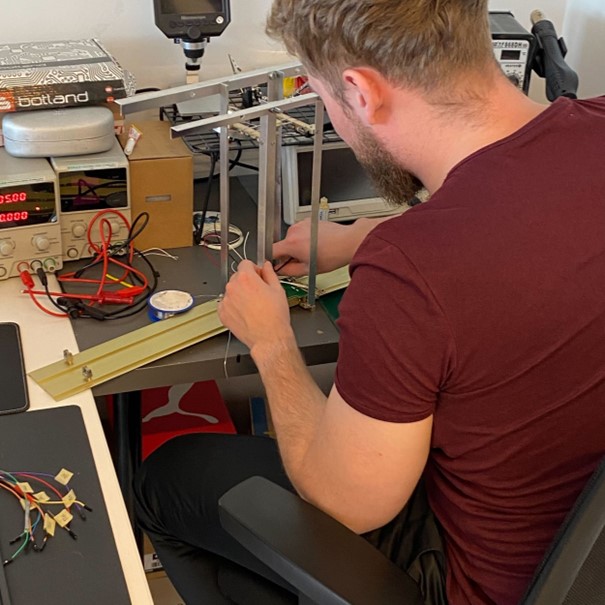
Figure 2: prototype development work ongoing at Revolv Space’s lab.
Driven by increasingly stringent requirements coming from the market, small satellites are shifting from being merely experimental platforms or playgrounds for students and universities to money-making assets. Satellite integrators are rapidly responding to this shift by updating their business models and applying manufacturing paradigms coming from the automotive and aeronautical industries to support constellation deployment and replenishment. However, integrators are signaling the lack of reliable and responsive suppliers that can support them in scaling their businesses by delivering components with short lead times. Integrators manufacture some components in-house, achieving a certain level of vertical integration, but they prefer to procure the most complicated and stand-alone equipment for their platforms. Revolv Space is planning to support the most ambitious and innovative satellite integrators by revolutionising the supply chain of the New Space Industry, providing cost-effective and reliable components with low lead times.
Revolv is developing SARA (Solar Array Rotary Actuator), a Sun-tracking device that allows operators to increase the Orbital Average Power (OAP) with respect to conventional deployable solar panel solutions. SARA is an autonomous embedded system equipped with coarse sun sensors for autonomous sun tracking, making it work like a sunflower, but in space. Revolv is rethinking the design and manufacturing paradigms of small-satellite components that will enable the market to break the limitations present due to the lack of trust towards spacecraft mechanisms. To achieve this, Revolv has developed an innovative backup mechanism that returns the panels to a neutral orientation, implementing fault tolerance at the hardware level as well.
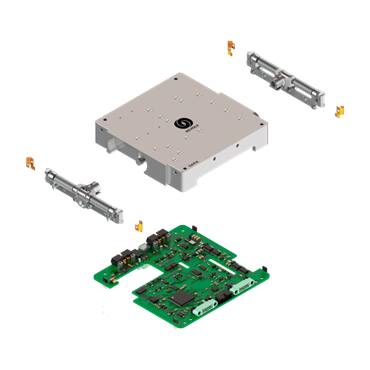
Figure 3: exploded view of SARA, compatible with 3 to 16U CubeSat platforms.
SARA is currently at TRL 6, reached after several system-level functional tests and component-level environmental tests. This is possible thanks to the testing equipment developed in-house by Revolv, including a Thermal Vacuum Chamber (TVAC), that allows the company to iterate fast on their product design. Revolv Space has started a flight-qualification campaign on the CubeSat-compatible version of SARA to reach TRL 7 and deliver a Flight Model by the end of 2023. Their goal is to demonstrate the technology in mid-2024, while also developing an analogous product for microsatellite and ESPA-class platforms (50-300kg).
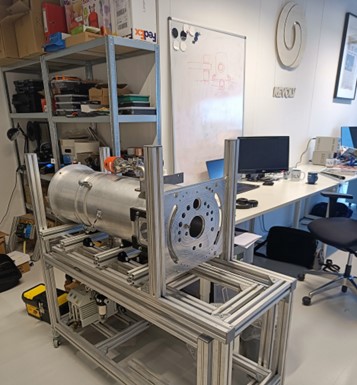
Figure 4: the Thermal Vacuum Chamber (TVAC) at Revolv’s premises.
Revolv has been collaborating with leading satellite integrators and operators active in the small satellite industry. They are now working with several prospective customers to incorporate their technology in the satellite architecture of several customers, starting from 2024. The company is planning to expand their commercial offer with complementary components, such as deployable solar panels, deployment mechanisms, and heat dissipation devices, enabled by cost-effective and very-high-reliability mechanisms. The vision of Revolv Space is to then become the go-to supplier of high-performance energy systems enabling the future space infrastructure.