

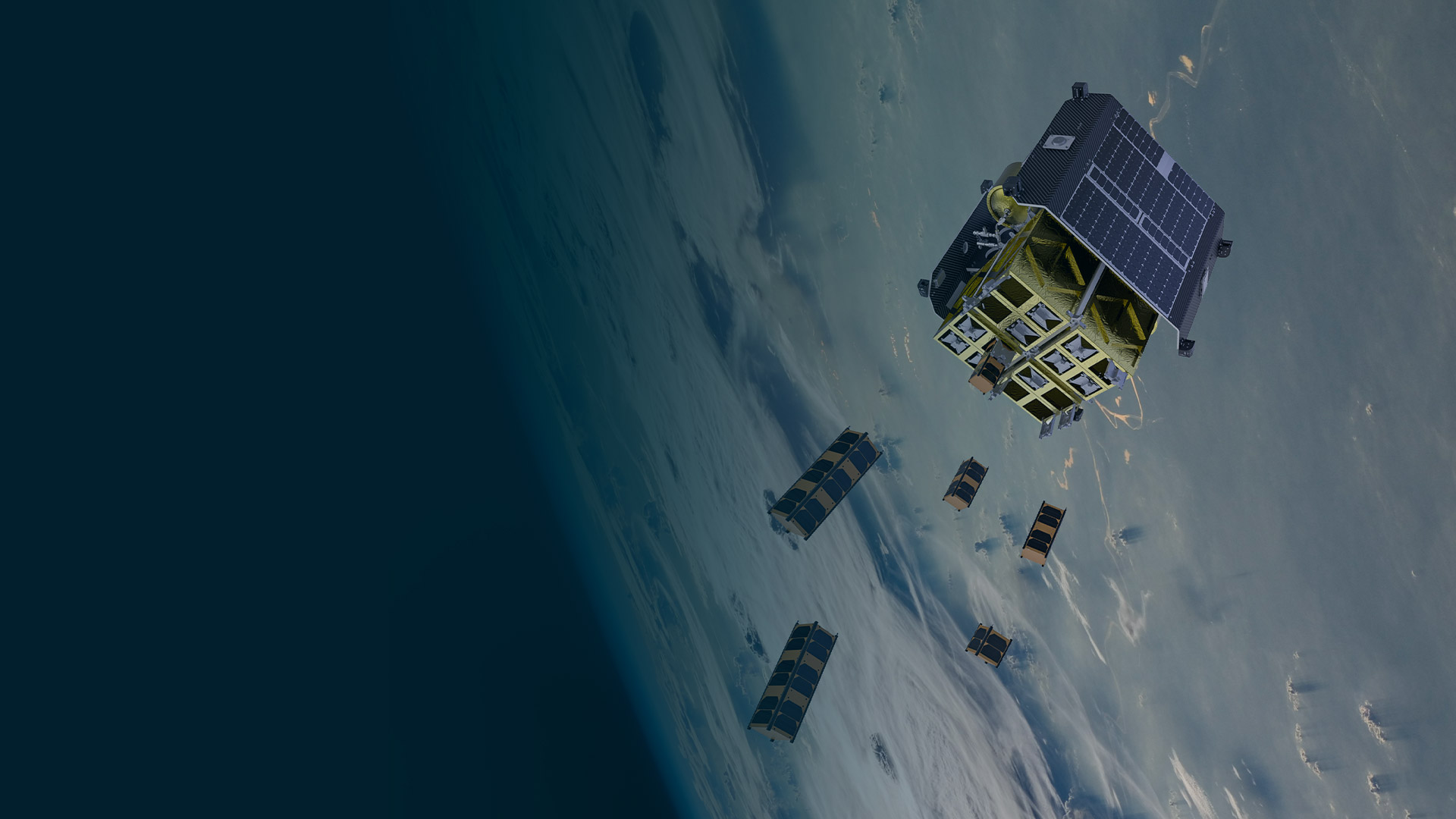
While the space economy heavily relies on satellites and their accessories, the upstream satellite industry specifically focuses on manufacturing, launching, and maintaining these satellites in space. As downstream industry demands evolve, so will the maintenance requirements for these satellites.
From 2016 to 2020, almost half of the satellite launchers were dominated by the satellite communications (Satcom) industry. A large portion of these deployments have shifted to low earth orbit (LEO) thanks to increase commercial demands for broadband constellations. This in turn has increased demand for small satellite designs for use broadband applications and the Internet of Things (IoT).
These changes in the Satcom industry come from the shift to data-centric use cases, resulting in structural changes in manufacturing, launch services, and ground segments.
In manufacturing, the industry has innovated through High Throughput Satellites (HTS), Very High Throughput Satellites (VHTS), software-defined payloads, smallsats, and Low Earth Orbit (LEO) constellations. These developments support mass production and demand but require new ground segment infrastructure to develop in tandem.
In response, there is a rise in flat panel antenna manufacturers and ESA investments in electronically steerable antenna solutions in the ground segment. These advancements are essential for backing the upcoming Non-Geostationary Satellite Orbit (NGSO) constellations, mainly fuelled by broadband applications.
The satcom industry’s shifts showcase its ability to adapt to new market realities and technological possibilities, paving the way for ongoing innovation and efficiency in global communications.

Join our newsletter to never miss new reports!
The European Space Agency (ESA) has signed a Letter of Intent with GEOSAT, marking an important milestone in advancing Europe’s space commercialisation landscape. Through ESA’s Partnership Initiative for Commercialisation (EPIC),...
The European Space Agency (ESA) is preparing to launch Henon, its first stand-alone deep-space CubeSat. Unlike previous CubeSats, Henon will operate independently in deep space, without the support of a...
The European Space Agency’s Biomass satellite marks a pivotal advancement in Earth Observation, leveraging cutting-edge technologies to conduct the first global forest census. Beyond its scientific mission, Biomass serves as...
Open Cosmos, an alumnus of ESA Business Incubation Centre (ESA BIC) in Harwell, UK, has had an eventful journey in 2024. Having closed over €100 million in contracts, the company...
The European Space Agency Business Incubation Centre (ESA BIC) network is a thriving ecosystem designed to support entrepreneurs who leverage space technology to create innovative solutions. While the name might...