Discover tailored programmes, calls and collaboration opportunities for academia, startups, large enterprises and investors.

The ESA Commercialisation and Industry Partnership (CIP) directorate plays a pivotal role in driving the commercialisation of the European space sector. By focusing on talent, access to capital, and fast innovation, CIP helps ESA and its partners evolve to meet the demands of a rapidly changing market. The directorate is responsible for developing and implementing ESA’s industrial policy, representing the Director General in all industry relations, and overseeing procurement and contract rules and negotiations for all agency activities and programmes. CIP also supports the industrialisation and commercialisation of space products and services, enabling European companies to scale up globally and access vital investments and finance. Through these efforts, CIP strengthens Europe’s position in the global space economy and fosters sustainable growth for the sector. As part of this directorate, the ACCESS programme has been created to further accelerate the commercialisation and competitiveness of European industry in both the space and non‑space sectors. Its purpose is to ensure that European businesses benefit from the growth, innovation and dynamism brought by the commercialisation of space. It offers support to all types and sizes of companies, ranging from startups to established players, across multiple sectors.
Since 2010, BASS has helped companies deliver space-based services and products through more than 1,000 studies and 750 projects. Today, as an element of the new ACCESS programme, ESA BASS continues to support the competitiveness of European businesses of all sizes and across all sectors, helping them to launch and nurture commercially viable innovative products and services using space technologies, assets or data. The core aim of BASS is to accelerate the transformation of innovative ideas into viable market-ready space-based services and applications that deliver measurable socio-economic impacts. BASS de-risks technical and commercial risks and shortens the path from concept to market – ultimately contributing to societal priorities such as the UN Sustainable Development Goals and Europe’s green transition.
ScaleUp offers support for companies at every stage of their commercialisation journey, from ideation to incubation, and from technology transfer to customer acquisition and scaling. A key element of ESA's commitment to accelerate space commercialisation and innovation, ScaleUp empowers companies to take risks, hit the market faster and attract investment through advanced business innovation. To date, ScaleUp’s ESA BICs – one of the world’s leading space incubation and technology transfer networks – has supported more than 2,000 start-ups across all Member States, enabling technologies to both spin in and spin out of the space sector.
Two European Space Agency (ESA) technologies are helping Austrian startup energyfamily support energy communities with real-time energy management. By applying ESA-developed data processing solutions, the company can reduce data volumes…
The Greek Space Tech Forum 2026 (GSTF26) took place in Athens, Greece, on 7–8 July 2026 and provided the setting for the celebration of the 5th anniversary of ESA Business…
Between May and June 2026, the European Space Agency (ESA) marked the inauguration of two ESA Business Incubation Centres (ESA BICs) in Portugal, ESA BIC Centro and ESA BIC Tagus,…
ESA Earth Observation Programmes (EOP) deliver vital satellite data to understand and manage our planet’s environment. By continuously monitoring Earth from space, these programmes provide essential insights into climate change, natural disasters, and global challenges. ESA leads in scientific excellence, technology innovation, and international collaboration, supporting the European Green Deal and Digital Agenda. Programmes like FutureEO foster pioneering missions and new applications, helping Europe maintain its leadership in Earth science and the fast-evolving geo-services sector. ESA’s commitment enables robust climate action, supports sustainable development, and creates business opportunities, ensuring a better future for all.
InCubed stands for ‘Investing in Industrial Innovation’ and is a Earth observation co-funding programme managed by ESA Φ-lab. InCubed focuses on developing innovative and commercially viable products and services that generate or exploit the value of Earth observation imagery and datasets. The programme has a very wide scope and can be used to co-fund anything from building satellites to ground applications and everything between or to develop new Earth observation business models.
The European Space Agency (ESA), through its InCubed Ambassador for Italy powered by STAM, brought together key stakeholders in Rome for the annual event “Co-create. Connect. Innovate. – Shaping new…
The European Space Agency is supporting the Czech company Stellar Exploration, within the framework of the ESA InCubed programme, for the implementation of the Earth Remote Sensing via GNSS Radio…
A strong space sector can play an important role in supporting innovation, competitiveness, and sustainable economic growth in Europe. At the heart of this effort is the European Space Agency’s…
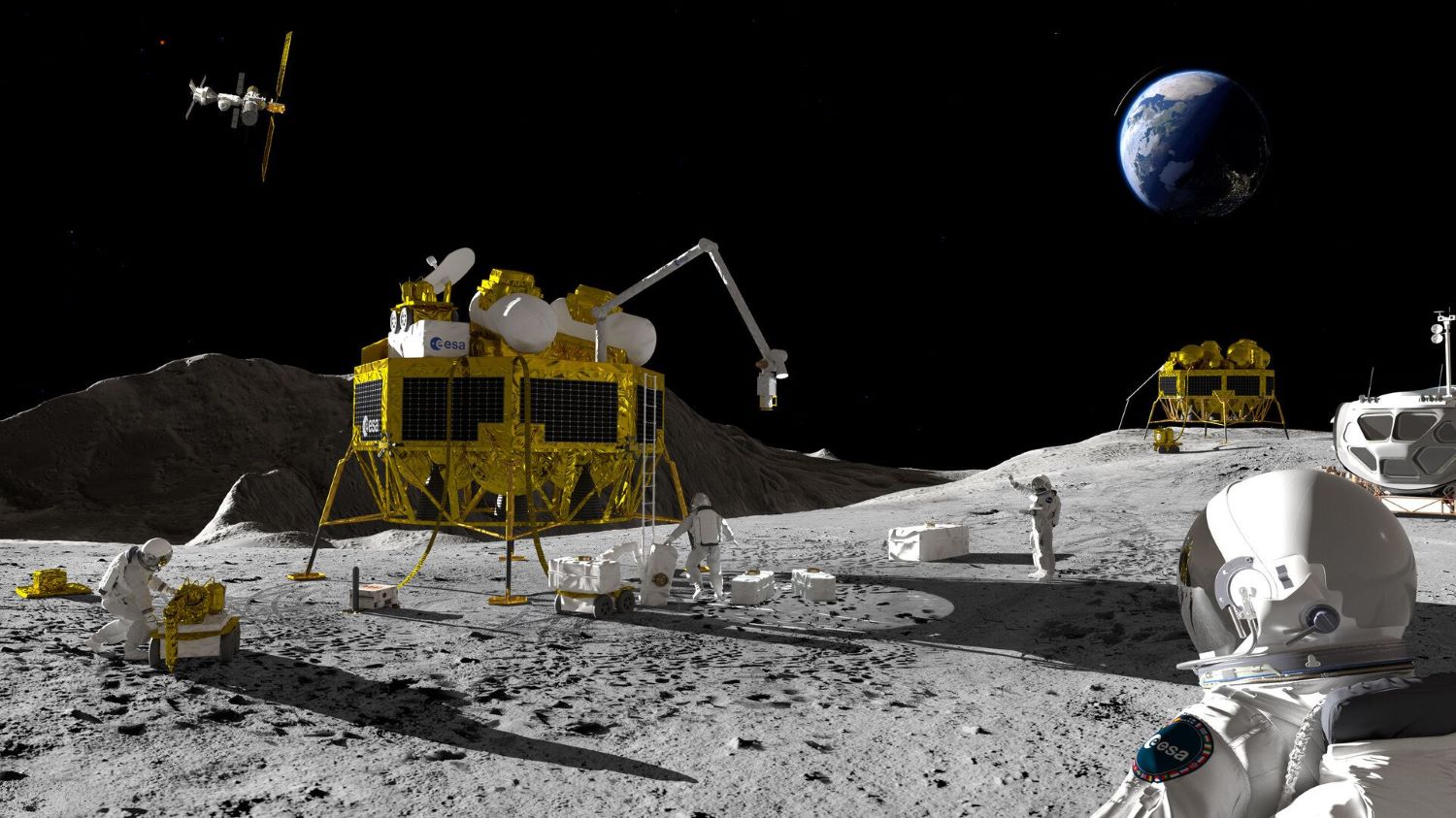
ESA Human and Robotic Exploration (HRE) programme advances Europe’s role in developing space infrastructure, such as the International Space Station, enabling unique research in microgravity. The programme supports technology and research on the ISS, European rockets, parabolic flights, and drop towers, delivering benefits for life on Earth and preparing Europe for future space challenges. With an annual budget of around 500 million Euro, the programme involves about 4,000 skilled professionals from all ESA member states, spanning engineering, science, strategy, and education. ESA’s astronaut corps, supported by ground teams, train for missions to the ISS, Moon, and Mars. Key projects include Europe’s service module for NASA’s Orion spacecraft, lunar landings, and Mars exploration with the ExoMars rover. ESA’s vision is a sustainable, international effort, combining human and robotic expertise to explore new frontiers and bring back knowledge for our planet.
The Business in Space Growth Network (BSGN) is an ESA initiative designed to stimulate new markets by empowering both supply and demand side actors along the full value chain. BSGN focuses on four key market segments: three microgravity enabled and in orbit markets—Life Sciences (including Health, Pharmaceuticals, Biotech and Medtech), Advanced Materials and In Space Manufacturing, and Agri Food—and one lunar exploration market, Space Resources. Through dedicated community events, the BSGN connects space and non space industry leaders, academia, investors, and institutional partners—sparking collaboration and innovation. The BSGN Industry Accelerators provide access to technical expertise, commercial maturation support, and ESA co funding to help transform early stage concepts into credible demonstrations and market ready solutions.
The European Space Agency (ESA), in collaboration with the Luxembourg Space Agency (LSA) and the European Space Resources Innovation Centre (ESRIC), is hosting the Second Space Resources Challenge (SRC). This…
The European Space Agency, through its Business in Space Growth Network (BSGN), is pioneering innovation across diverse sectors by capitalising on the unique research conditions provided by space. With Industry…
Embark on a thrilling journey of innovation with the Open Space Innovation Platform (OSIP). Our groundbreaking ideation campaign is set to tackle the most critical challenges in space exploration. TITLE…
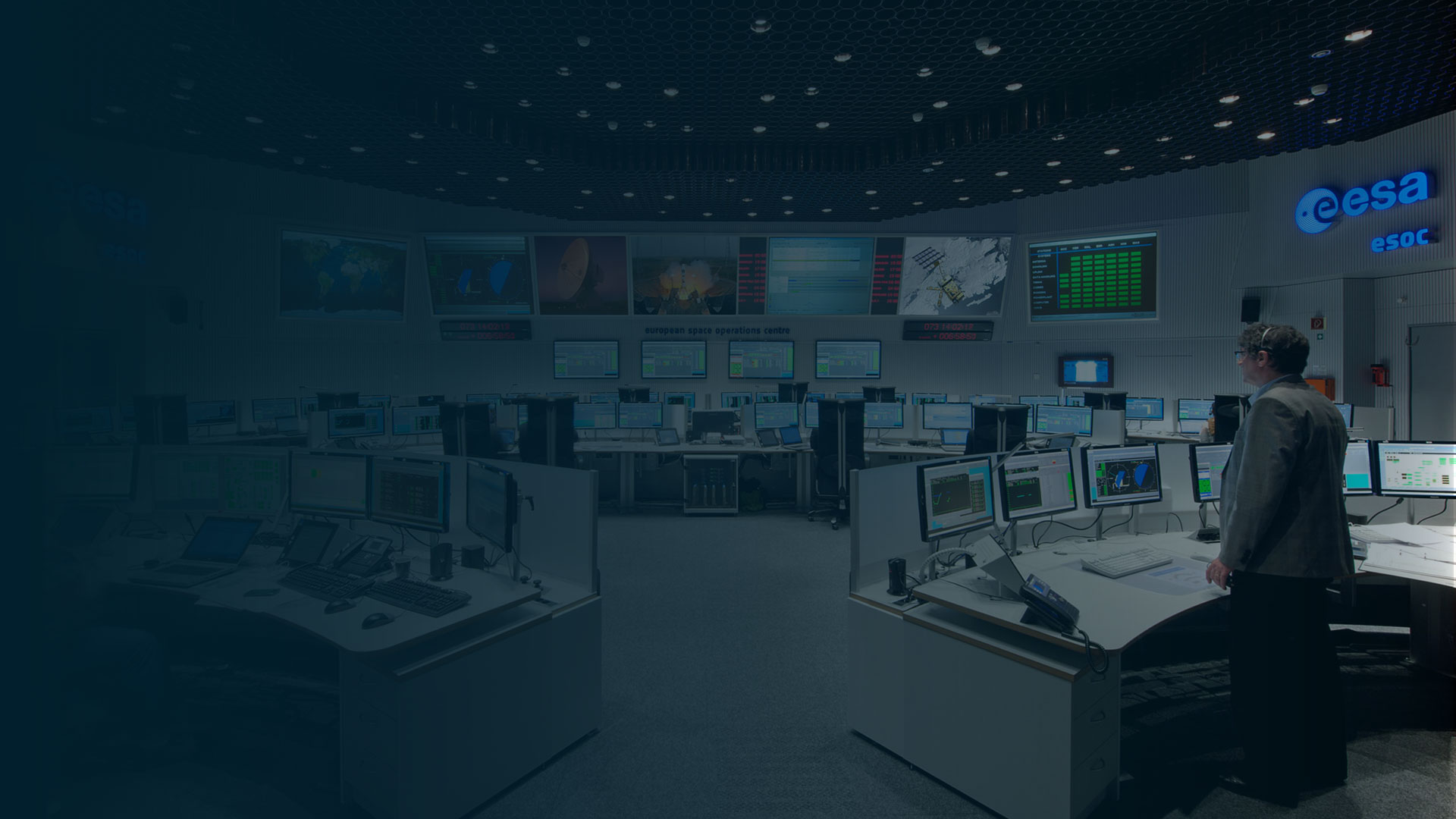
ESA’s Operations (OPS) directorate ensures Europe’s autonomy and leadership in space by flying pioneering missions for planetary science, Earth observation, astronomy and space safety. At the heart of this effort is ESOC, the European Space Operations Centre, recognised internationally for its excellence and innovation in space operations, ground system engineering, and space safety.
ESOC teams control spacecraft in orbit, manage ESA’s global ground station network (ESTRACK) and develop world renown ground systems for space operations. These elements comprise a critical strategic asset for ESA and its Member States: The Mission Operations Infrastructure (MOI). OPS also provides its expertise to other ESA programmes as part of the ESA matrix. OPS is pioneering ASSIGN, helping ensure ESA and Europe remain key players in developing a resilient and secure Solar System Internet and safeguarding their autonomy via network security.
OPS is also home to ESA’s Space Safety Programme, which helps protect Earth from hazards originating in space, as well as human-made threats. Programme areas include asteroid detection, protecting critical infrastructure from space weather effects and ensuring that spaceflight remains safe and sustainable
The Competitiveness Segment of the Space Safety Programme is intended to broaden the scope of space safety in commercial markets by speeding up the process of innovative ideas from technologies to products and services. ESA will act as a trial user and early adopter of the space safety industry’s products and services, thus reducing the risk to businesses. The segment will complement similar initiatives in other programmes. It will be industry-driven, subject to a co-funding scheme and explicit support by the relevant Member States, with a fast-track procurement process to shorten the time to market.
In 2025, ESA celebrates 50 years of Estrack, its satellite tracking network, and 20 years of deep space operations at the Cebreros antenna in Spain. To mark the occasion, ESA…
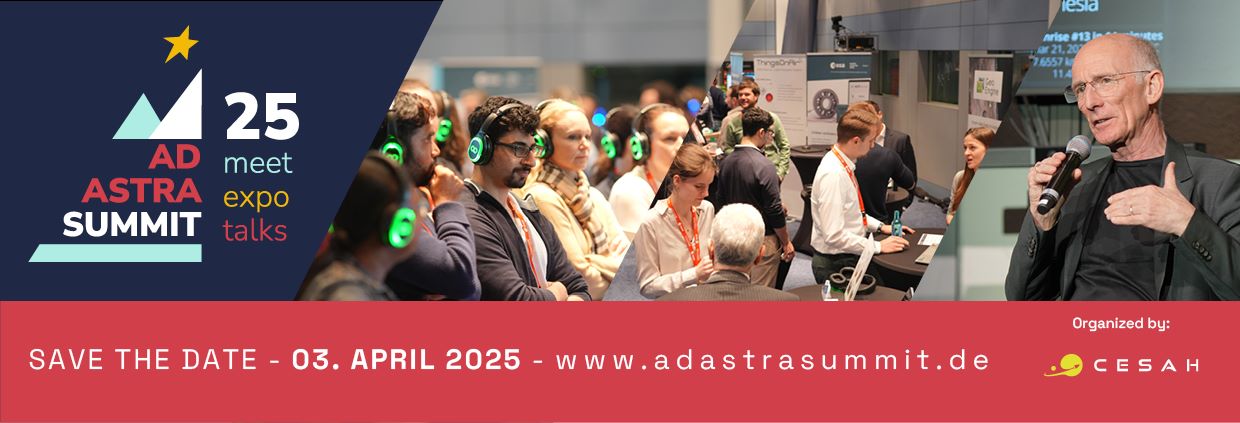
ESA/Foto Studio Hirch The Ad Astra Summit 2025, held on April 03 at the European Space Operations Center (ESOC) in Darmstadt, attracted over 250 participants, bringing together space stakeholders, start-ups,…
ESA Space Transportation (STS) programme secures autonomous and competitive access to and mobility in space through new transportation systems, solutions and services, supporting vital applications including navigation, communication, security, exploration and science. The programme accompanies exploitation of ESA-developed vehicles (Ariane 6, Vega C and Space Rider) to deliver on institutional and commercial demand, thereby securing European space transportation autonomy and non-dependence in the short- and medium-term. With the European Launcher Challenge, ESA implements transition from ESA-developed launch systems to a more diverse European space transportation sector including launch systems and related services developed under the responsibility of European industry. With Future Space Transportation preparation, ESA STS embarks on Europe’s space transportation towards Horizon 2040 with development, test and demonstration of elements necessary for realising the future space transportation ecosystem in 2030s. These elements include high thrust engines, reusable stages, in-space transportation and space logistics solutions geared towards end-to-end services to all orbital destinations. Finally the STS programmes provide Europe’s space transportation industry with world-class strategic ground infrastructure. Through these efforts, ESA secures Europe’s leadership in space and delivers benefits for society as a whole.
FLPP is ESA’s programme for future space transportation. As a strategic ecosystem enabler, FLPP supports European industry in developing and maturing technologies, systems, and partnerships. These are needed for a modular, reusable and commercially viable space transportation ecosystem designed for sustainability, resilience and autonomy. FLPP supports the design, development, and demonstration of capabilities across three domains: access to space, in-space transportation and return from space.
Boost! is ESA's Commercial Space Transportation Services and Support programme that aims to boost commercial initiatives that offer space transportation services to space, in space, and returning from space. Boost! co-funds and assists the pre-commercial development of new European space transportation services ranging from launch services, in-space transport services to return from space capabilities, and supports ESA Member States in implementing national space transportation objectives. Moreover, Boost! implements the Flight Ticket Initiative co-funds European launch services for ready to fly IOD/IOV satellites.
ESA’s FIRST!(Future Innovation and Research in Space Transportation!) initiative launched it s seventh Invitation to Tender (ITT) last week, this time on the topic of Structures, Materials, Mechanisms and Processes…
Considering more sustainable methods of developing emerging space transportation technology design is essential in order to secure accessibility to space, avoid impacting negatively on life on Earth and for the…
As launcher programmes advance across Europe, coordinating shared technical priorities is becoming a defining feature of how future access to space capabilities are being shaped. On 10 March, nearly 70…
The Directorate of Technology, Engineering and Quality (TEC) drives ESA’s innovation and technical excellence, ensuring the agency is equipped for future challenges. TEC leads long-term technology development, supporting research infrastructure such as laboratories and test facilities, and covers every aspect of the space environment. Its mission is to deliver enabling technologies precisely when new ESA and European missions require them, underpinning competitiveness and opening new markets for the European space industry. TEC oversees R&D programmes that source innovation beyond immediate market needs and de-risk the process for industry, with a strong focus on small and medium-sized enterprises (SMEs). The directorate also coordinates European standardisation efforts, boosting cost-effectiveness and levelling the playing field for smaller companies. Organised into four departments—Electrical, Mechanical, System Engineering, and Product Assurance & Safety—TEC provides technology development, engineering support, and quality assurance across ESA and European industry.
The Discovery & Preparation elements of ESA’s Basic Activities lay the groundwork for ESA’s future by performing the first R&D steps in potentially disruptive concepts. The elements also work with industry to develop baseline designs for future ESA missions in all space research domains. The activities are typically carried out by European industry and academia; they submit their novel ideas for space research through ESA’s Open Space Innovation Platform (OSIP). All ESA Member States contribute to Discovery & Preparation on a mandatory basis.
Under the Technology Development Element (TDE), ESA tests the feasibility of prospective technologies, giving Europe the ability to look ahead and define future space missions and activities. Long-term planning is inherently risky when it comes to space, but TDE reduces the degree of risk by demonstrating the viability of a given technology long before a mission is based around it. All ESA Member States contribute to the TDE on a mandatory basis. The programme is central to ESA’s existence and has given rise to most of the agency’s advanced technologies.
The General Support Technology Programme (GSTP) enables missions by making sure the right technology at the right maturity level is available at the right time. Under three distinct elements – Develop, Make and Fly – GSTP takes previously proven innovations through successive stages of engineering, finally evolving them into fully tested hardware to be ready for adoption by future missions. It is a key programme for building know-how and capabilities in the industry, assuring Europe’s competitiveness in the global market, creating jobs and keeping Europe at the forefront of technological innovation.
The European Space Agency (ESA) is preparing to launch Henon, its first stand-alone deep-space CubeSat. Unlike previous CubeSats, Henon will operate independently in deep space, without the support of a…
The European Space Agency’s Biomass satellite marks a pivotal advancement in Earth Observation, leveraging cutting-edge technologies to conduct the first global forest census. Beyond its scientific mission, Biomass serves as…
ESA’s Connectivity and Secure Communications Directorate (CSC) leads innovation in satellite telecommunications, supporting the development of advanced technologies and applications that combine space-based systems. CSC fosters research, development, and industrial partnerships, helping European and Canadian industries produce world-class products and services. The directorate invests in public-private partnerships to enable new satellite systems and validate future services. CSC identifies industry and institutional needs, proposes targeted programmes, and oversees the development, testing, and demonstration of new satellite systems and services. By promoting interoperability standards and developing space-based solutions for European society, CSC strengthens the competitive position of industry and service providers. The ARTES programme, active since 1975, offers flexible support for projects at various stages of maturity.
“Our goal is not only to generate ideas, but to experiment, to test, to learn, and to collaborate. Because here in Redu, innovation is not a slogan, it’s a mindset.”…
JoeySat, a demonstrator satellite developed under the ESA Sunrise Partnership Project in collaboration with Eutelsat OneWeb, successfully marked its second year in orbit. Launched on May 20, 2023, aboard a…
ESA announces three new Invitations to Tender under the ARTES 4.0 programme The ESA Advanced Research in Telecommunications Systems (ARTES) 4.0 Future Preparation (FP) strategy is designed to identify new…