

The Nihonbashi Space Week provided a platform for key figures from the European Space Agency (ESA) to discuss the future of space commercialisation.
In a series of interviews, ESA representatives such as Josef Aschbacher, Director General (DG) of ESA, and Geraldine Naja, Director of Commercialisation, Industry and Competitiveness (CIC) shared their insights on the agency’s strategic approach to public-private partnerships and the complexities of a multinational supply chain in the space sector. The event also emphasised the collaboration between Europe and Japan in the space industry, highlighting the importance of international partnerships in advancing space commercialisation.
ESA’s Commitment to Japan
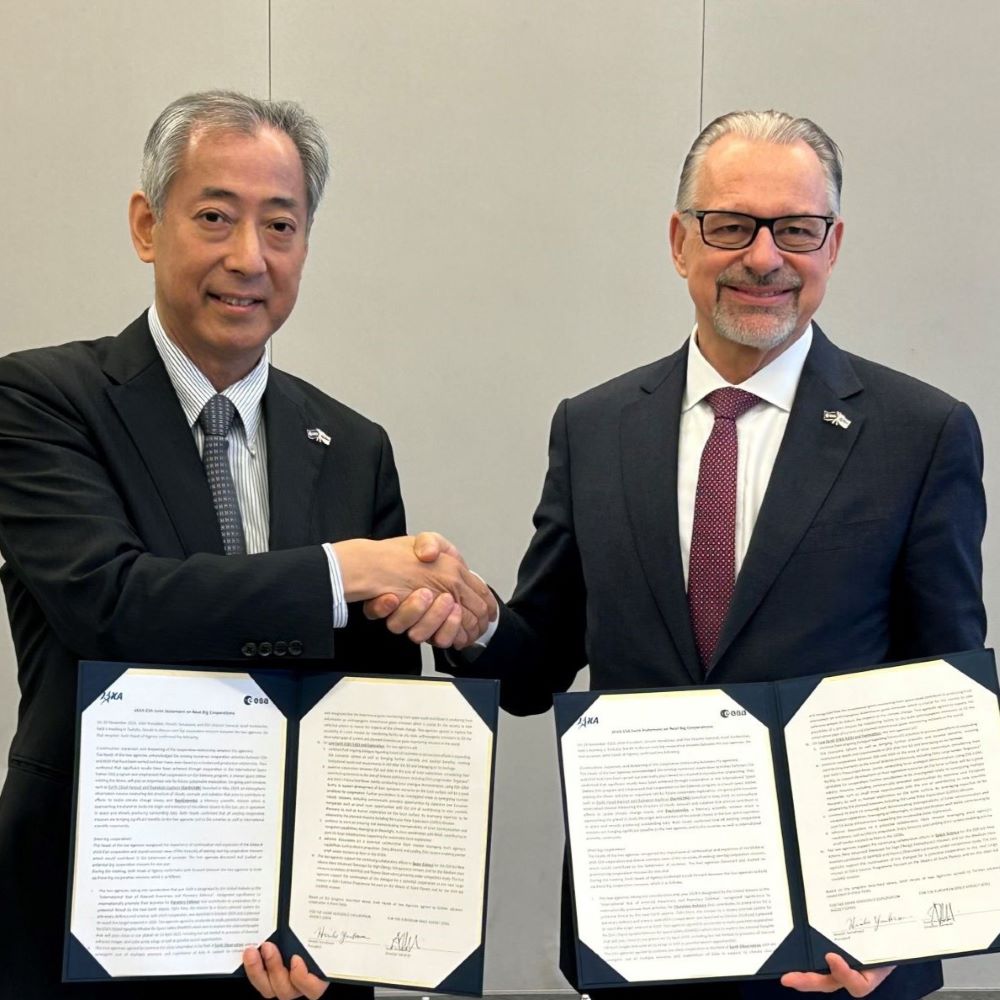
ESA’s presence in Tokyo during the Nihonbashi Space Week was also an opportunity to discuss the future of space cooperation with JAXA and to participate in the event, fostering connections between the European and Japanese space communities. Josef Aschbacher, ESA Director General (DG), addressed attendees at the Opening Ceremony of Nihonbashi Space Week 2024, expressing gratitude to Prof. Shinichi Nakasuka, the CrossU team, and Mitsui Fudosan for their support in welcoming the ESA delegation to this emerging hub of Japan’s space industry.
Moreover, ESA signed a Letter of Intent with CrossU, aiming to enhance commercialisation efforts, business incubation, and the creation of resilient space ecosystems. This initiative is set to bridge the geographical distance between Japan and Europe.
The engagements during the week have established a foundation for future collaboration, with a focus on exploring new avenues in space science, Earth science, human and robotic exploration, and planetary defense.
European-Japanese Startup Competition
A groundbreaking initiative celebrated during the Nihonbashi Space Week was the first European-Japanese space start-up competition. This competition was designed to forge powerful partnerships and encourage innovation within the space industry.
Winning companies received sponsorship to attend the Nihonbashi Space Week 2024 in Japan. The competition identified the most promising European space start-ups with potential business cases for the Japanese market or collaborative projects with Japanese partners. This initiative is expected to expand the reach of European space start-ups and scale-ups globally, fostering stronger ties between the European and Japanese space communities.

Public – Private Partnerships
The ESA leadership underscored the dynamic nature of the space industry, which often progresses more rapidly than government programmes. They emphasised the necessity for ad-hoc reflection to adapt to these changes.
The conversation revealed a keen awareness of the diverse needs across different markets—some of which are still emerging, others requiring growth, and a few constrained by monopolies that stifle innovation. The role of public institutions was highlighted, particularly in leveraging tools like R&D funding, public-private partnerships, and infrastructure investment to cater to specific market demands.
Competition and Innovation
ESA’s historical success in fostering competition was presented as a testament to their approach. The development of two product lines for GEO Satcom by Airbus and Thales Alenia Space, which became market leaders before the rise of Starlink, was a notable example. Additionally, the agency’s efforts to encourage competition in LEO Cargo and science missions were discussed to stimulate innovation and progress.
Support for New Entrants
A significant part of the discussions focused on ESA’s commitment to welcoming new entrants into the space industry. Initiatives like ESA’s ScaleUp programme, which supports Small and Medium Enterprises, designed to assist start-ups in scaling their operations, were highlighted as key components of ESA’s strategy to foster a vibrant and competitive space sector.
Multinational Cooperation
ESA leadership provided a nuanced view on the risks and benefits of a multinational supply chain. They explained how the agency mitigates risks by ensuring a diversified supply chain, avoiding single points of failure, and promoting double sourcing for critical components.
Furthermore, the advantages of a geographically diversified supply chain were discussed, including flexibility, resource pooling, international expertise, and the ability to undertake large-scale projects beyond the capabilities of individual nations.
New Opportunities and Investments
Geraldine Naja, Director of Commercialisation, Industry, and Competitiveness (CIC) at ESA brought to light several key areas of focus. These included climate monitoring for terrestrial hazards, in-orbit servicing to boost sustainability in space, and space connectivity to enhance global communications and navigation.
The presentation also noted the significant private investment in Europe and the global space economy, emphasising the booming demand for space transportation services and the global commercial downstream revenue.
ESA’s Commercialisation Services
ESA’s range of services to support commercialisation was also a topic of discussion. The agency’s Business Incubation Centres (ESA BICs) offer funding, business, and technical support to start-ups and SMEs, while the Phi-Lab NET bridges the gap between research and the commercial world for strategic market needs. Additionally, the Investor Network was mentioned as a resource that unlocks capital for commercialisation through technical and market advisory, investment opportunities, and dedicated events. Finally, ESA introduced the Open Space Innovation Platform (OSIP), a website that enables the submission of novel ideas for space technology and applications.
The Nihonbashi Space Week provided valuable insights into ESA’s strategic approach to fostering a competitive and innovative space industry. The agency’s leadership offers a glimpse into the future of space commercialisation and the pivotal role that ESA plays in driving this progress.